

I was giving a reading at FOOD, Lucien Smith’s new restaurant in Chinatown based off the legendary artist restaurant run by Gordon Matta-Clark from way back when. I was happy to see my friend Sam in the audience. To celebrate my reading of the first fiction I published, ever, he took me out afterward to get a foot massage in Chinatown, where my feet were oiled and rubbed with a warm towel as I complained about my mid-life clarity. We wandered Chinatown for a bit, and stopped for tea at Silk Road. Was I surprised to be having a good time? Sam and I have had a few rifts in our day—we argue often—and our friendship has seen like five dispensations, even though I’ve only known him for five years. His eyes looked glazed over, which is how I know he is having a good time, even when we’re not talking. We enjoy each other’s presence. I recently told him he was the most successful writer in our cohort at journalism school, because a magazine had flown him out to El Salvador to report about President Bukele and his inner circle. Once, I had made a New York state senator cry on the phone, but that was second rate stuff.
I would say it was our writing that held our friendship together, although I’m not so sure. We don’t even write the same things anymore. Lately, we had started to diverge ideologically, something that took me embarrassingly long to notice, maybe because I didn’t want to. Once I did, I had to decide: There’s a kind of person who only wants to be friends with someone who shares their values, and I had to pick if I was going to be that person. But hours earlier, there was only one friend at my reading—let’s get the receipts, I personally invited so many people and nobody came—who took me out to get foot massages, and then cheered me up about my rejections because he thinks the world of me, and I was having a good time, too. I love Sam.
Sam loves Nietzsche. This is one of our ideological divergences. We get along because we both care about ideas, if not different ideas, as he once referred to my religion as “putting Christianity in a Balenciaga jacket.” He studied philosophy in college, and wrote his final paper on Nietzsche.
“Everything is the will to power,” he said about his reading of Nietzsche. There are no universal morals. Only entities gaining or losing power. I followed the logic. I got that this is how someone could end up sympathizing, if not outright supporting, a political party that justified its existence by power and momentum alone.
“I don’t think that’s true,” I said.
“What do you mean?”
“I just don’t see the world that way.”
“Think of power like energy. On a molecular level.”
“What about the will to pleasure? That isn’t about power, but amusing oneself,” I said. “Not necessarily better, but it’s an alternative.”
At some point recently, or when I was very young, I decided I would devote my life entirely to the pursuit of pleasure. I was twenty-six. Having quit my six-figure job in advertising, I moved to Berlin and discovered techno. I became an art critic. One has to refine one’s pleasures, to purify and sustain them—this is what the Epicureans taught. I knew if I lived a long life and had no lover or offspring to my name, but I only had art, this would still be a life worth living, because I would know that art, and therefore pleasure, was never far away. Or rather joy for that matter. Pleasure leads you to joy, which I experience with art at its highest. Depressed and unfocused during the abyss of the afternoon, I know all I have to do is switch rooms and pick up a story from Dennis Johnson’s Jesus’ Son, and turn wild and delirious with wicked wonder and glee. Art convinces me to be alive, it reminds me that I’m alive, and it is how I know I am alive. So I have devoted my life to it.
Art criticism taught me how to love. If love is a kind of solicitude, then love is the practice of looking closely. It’s like when I encounter an artwork. To receive its integrity, I have to let go of my notions of criteria or standard. At this point I’m not interested in what’s good and what’s bad. I don’t think that’s the job of a critic. All that’s nonsense, it’s not real knowledge, and it can close you off, shut down the imagination. I try to stay open. I want to really look at an artwork, its strangeness, unlock myself to its way of being in the world, which means I have to allow myself to be with confusion, panic, anarchy, or despair, by which I’m simply describing the work of humility. This level of sincerity might even come across as moral anarchy. All I know of good and evil has left me, and I’m lifted above desire and hate, and I have an unmistakable feeling that I’m being rescued. Perception shimmers like in a prophecy—when I receive the unknown, it is as if I have always known it, and isn’t that also a description of love? This is what I mean by joy.
*
Last year, I was invited to give a seminar on art criticism at Performa, a prominent performance art showcase in New York. Incredibly, they scheduled on the Sunday afternoon of Halloween weekend. With only two hours to spare, I ripped myself away from a warehouse party in Brooklyn, took an Uber back to my apartment, slurped up spaghetti and meatballs out of a can, and took my laptop on the train to the Performa Hub in SoHo.
My lecture was on Kant’s Critique of Judgment (1790). I had been reading it earlier in the year and averaged ten pages an hour. While highlighting and jotting notes, I would blast Beethoven’s piano symphonies, converting Kant into an IMAX experience.
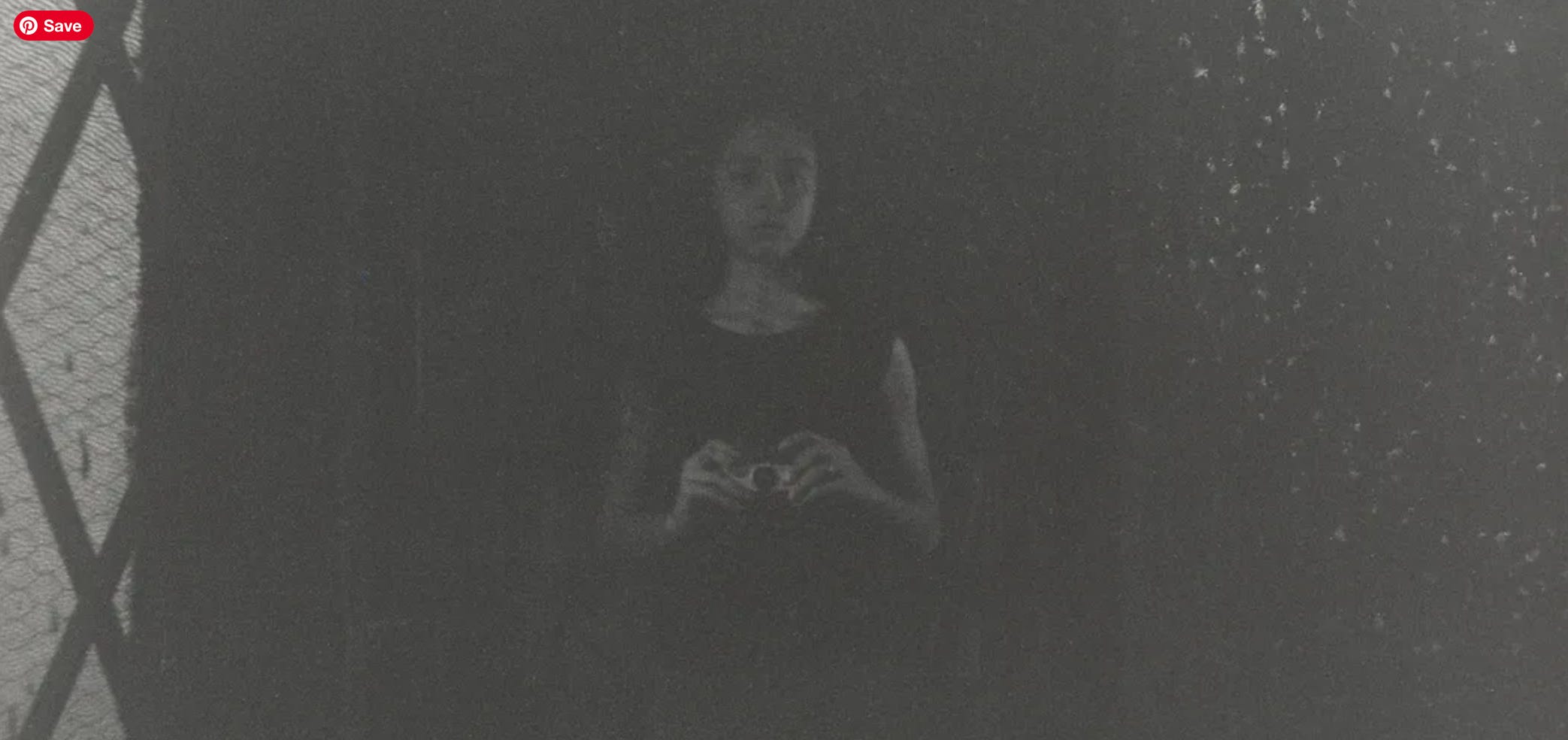
Adrian Piper had once confined herself to her apartment for days, fasted, and read Kant in a fugue state. She documented herself in the series of photographs, Food for the Spirit (1971), as she felt herself slowly disappearing, the boundaries between self and world dissolving. When I read the third critique, my mind entered a flow state that canceled movie plans. I could not stop thinking about Kant, on the subway, or at a loft party in Greenpoint, where I looked at the windows over the water and the Manhattan skyline, and hear this single sentence in my mind, I am awake.
No other philosopher had taken art this seriously since Aristotle. Kant believed that an artwork of the highest beauty had, through form, the quality of reflecting the essential freedom of the human. Kant was the first philosopher, in the second critique, to prove that freedom exists. I had known art to do this, many times, but before Kant I had thought it was merely “personal.”
Critique of Judgment not only invented modern aesthetics that has more or less remained uncontested for two-hundred years, it was a theory of authority. He posited that the art critic would be able to say of a work of art, “This is beautiful,” not as an opinion but as a rational judgment, and that everyone should agree. Beauty was universal, because beauty was true, because there was something inherently human about beauty. Importantly, it wasn’t the inalienable beauty of mankind that laid the justification of Kant’s notion of universal human rights, but mankind’s universal faculty to judge beauty that substantiated the notion that all humans are equal, with liberties that must be protected by the state. Kant elevated taste higher than ethics, higher than religion, placing it as essential to the very survival of human freedom. Who actually still believes this?
The notion was Protestant, though Kant, even though Protestant himself, had made the first secular defense of democracy. We were equal, not because God had made us, but because we were rational. It’s not that he thought humans naturally made rational choices, all or even some of the time. For him, reason was as self-evident as math. An apple and orange always amounted to two fruits. Pythagorean’s theorem always led you to the hypotenuse. Math was a priori knowledge, because it was true before one was even born. All humans acknowledged this, which proved reason as a universal humanity faculty. Unlike Hobbes, Kant did not see math as a law of nature, because reason belonged to the human mind. Therefore, math told you less about the world, and more about how humans understand the world.
Reason, he categorized as “universal subjectivity.” It was subjective because it belonged to the individual’s mind, not reality. It was universal, because all individuals shared this understanding. This revolutionary notion is what gives us universal human dignity, which is how human rights can be possible at all.
*
Judgment, for Kant, is the determination of whether something in the world makes sense, using reason. But there are two kinds of judgment. A determinant judgment is when the reason something makes sense is self-evident. But a reflective judgment is when the reason something makes sense is not automatically obvious, it’s something that needs to be found, and then explained to others. When something is determined as beautiful, using rational principles to explain its internal harmony, Kant calls this taste. And when that taste is communicated, this is criticism.
Kant argued that critics of his day were using the same word “beauty” for three different things: the agreeable, the good, and the beautiful. This also meant there were three kinds of liking. The agreeable was something whose purpose was to appeal to the senses. Erotic appeal is agreeable. Entertainment is agreeable. They are reducible to stimuli and exist to excite. And whether or not they did excite was a determinative judgment, because its success was self-evident. The creme brûlée either succeeded or failed according to measurements of sweetness. This is the kind of criticism that gives grades to art. Critics who mistake beauty for decoration will justify their preferences more or less in these terms.
Then there is the good. This is something that has a functional, utilitarian, or rational purpose. A pad thai is good because it satiates hunger. A Lamborghini is good because it is excellent at what it does. There is a progressive social tradition in art history, which I am sympathetic to, that elevates art that serves a social function, i.e. art with a purpose. Agitprop for the revolution. Or the art of social care that stages therapeutic interventions. When Rirkrit Tirivanija’s Untitled (1990) performance cooked pad thai and passed it around to strangers, it was “good” because it fed people and brought people together. This kind of art carries with it “the highest rational interest.” Yet still, Kant didn’t consider this to be beauty, because again, it was measured as a success or failure.
If freedom was essential to beauty, then beauty could not be tied to a purpose. It could not be measured by any standard other than its own. Its reason is “immanent.” This is why the judgment of beauty is reflective, because its beauty can only be justified by the standards it places on itself. If its beauty depends on nothing outside of itself, its beauty “is disinterested and free.” Art didn’t succeed or fail at being beautiful, it just was or wasn’t beautiful. Kant stressed this, because beauty’s freedom, autonomous unto itself, was a direct reflection of man. Kant used the word Geist to describe human reason, which is to say that pure reason was an effect that was one and the same as its cause, the possession of which is how human freedom can exist.
It’s possible that the appreciation of beauty, the highest order of all aesthetic experience, is when one is most human. Neither the beauty of art or the freedom of man answered to any standard imposed from the outside. This is why the judgment of beauty is reflective, because its beauty can only be justified by the standards it places on itself. Its logic is “immanent.” Kant’s term for this experience is “free play,” which I think is cute. It is the mind’s faculties at their most human state: play. And because beauty was autonomous from the laws of reality, it had its own reality, a supreme reality, which could then reorder how you understood everything else—desire, the premise of power structures, the status of the self. The world upends. Here, the critic’s job of close-looking is to engage with a work of art, engage with it through the senses, understand how it sits in reality, attune it to the spirit of an idea—arriving at a “unity of concept” that is, ultimately, what beauty is. Only when experiencing all this, one understands what it means to be human. This, again, is what I mean by joy.
*
Sam told me that it was Nietzsche’s idea that human will, an extension of character, was a work of art. We were still having tea, but the gamers in the back room had already left. From his phone, he read to me a quote from The Gay Science (1882) that was so important to him as a college student, that he kept it within easy access on his portable device at all times:
One thing is needful—To “give style” to one’s character—a great and rare art! It is practiced by those who survey all the strengths and weaknesses of their nature and then fit them into an artistic plan until every one of them appears as art and reason and even weaknesses delight the eye. Here a large mass of second nature has been added; there a piece of original nature has been removed—both times through long practice and daily work at it. Here the ugly that could not be removed is concealed; there it has been reinterpreted and made sublime….In the end, when the work is finished, it becomes evident how the constraint of a single taste governed and formed everything large and small. Whether this taste was good or bad is less important than one might suppose, if only it was a single taste!
“This is the problem of beauty,” I said.
Sam nodded. “It’s the problem of beauty.”
There are few paragraphs in world literature that more efficiently explains how evil works. Here, Nietzsche took the Kantian notion of beauty, and applied it to humans, who would, under Nietzsche’s rubric, be judged not on moral but aesthetic terms. Beauty, as Nietzsche defines it, can justify good or evil, because beauty, as Kant defines it, is amoral—in order to be free, it must be independent from and indifferent to morals. This is the aporia. If the good carries with it the highest rational interest, it has a purpose. Beauty exists in absolute disinterest. The existence of the human justifies itself, it doesn’t matter whether it is any good. After all, what makes one human is one’s capacity for reason, not the exercise of it.
Beauty often justifies evil. Violence committed under the spell of charisma, in the name of efficiency. Genocide as a matter of organizational design. In Nietzsche’s formulation, weakness can “delight the eye,” ugliness be “made sublime.”
Sam read me another quote, from The Will to Power (1860).
Weakness of the will: that is a metaphor that can prove misleading. For there is no will, and consequently neither a strong nor a weak will. The multitude and disaggregation of impulses and the lack of any systematic order among them result in a “weak will”; their coordination under a single predominant impulse results in a “strong will”: in the first case it is the oscillation and the lack of gravity; in the latter, the precision and clarity of the direction.
What we’re talking about, here, is design—form as problem solving. The will as form is evaluated by its efficiency of purpose, its power. This is his version of beauty. It was extrapolated from Kant’s notion of the good, whose rationality was transcendent, true in all situations. Except Nietzsche turned Kant’s notion of the rational, and therefore universal, “good” on its head. He saw the justification behind morals to be a construct, which could always be deconstructed and debunked. And so if the good is established by construction and not reason, it can only have relational qualities. It can only be particular. Power is what carries in it the highest individual interest, rather than the highest “human” interest, only “nihilistically” relevant to the individual will. And if everything is form, morality does not exist. There is no “universal subjectivity.” The total sum of reality is a permanent, irreversible, and all out state of war.
*
The art critic enters. If Nietzsche revealed that the problem of beauty is the justification of evil as a matter of form, then the art critic’s very urgent job to work out the nature of beauty, which at heart is the problem of evil.
While Nietzsche thought beauty had a purpose, Kant did not. Yet beauty still had effects in the world. Beauty had no purpose but was still “purposive,” meaning that its effects were incidental. Take Kant’s example of a flower. We judge it as beautiful, purely on formal terms. The petals and stamen have biological functions, for pollination, but that has nothing to do with why we perceive it as beautiful. To the birds and the bees, its form has a purpose. But to humans, that purpose is just a side-effect or byproduct of the form we find beautiful. Here, we might see Kant anticipating queer aesthetics. Unlike the heterosexual, the queer eye sees the beauty of the human body not for procreation, but as beautiful, free from function. Straight sex is purposeful, queer sex is purposive. (Sorry, I had to.)
This notion of the “purposive” directly relates to the politics of a work of art. Following Kant’s logic, art that is beautiful should not be political, but its existence itself will be political. Beauty will be controversial and autonomous to that controversy. Power is purposeful. Freedom is purposive.
And let’s say that the very idea of human freedom was an idea about purposelessness, without purpose. The idea itself is almost so reflexive as to, on its own term, inspire little but indifference. It was an apolitical idea, but the fact of it sent political shockwaves across the continent and the West. Its purposive effects instantiated rights as such, and the very idea liberal democracy, so visionary it was not realized until several hundred years, recent enough that my parents watched it on TV. Yes, beauty will always exist within power relations, and cannot be experienced outside of those relations. But the concept of beauty as “purposive without purpose” is autonomous from power, and the very fact of it can intervene upon the power relations that frame it. Beauty can reorder the sensible. It can ignite contingency into what was overdetermined. It can transform an object into a subject. All that is known can be undone.
But what’s revolutionary about Kant is that by elevating beauty to one of the few human universals, he designated beauty as a human matter, a matter of the state, whose concern is human flourishing. And it is the critic who makes these judgments. For if judgment is our most primary cognition, and the beautiful is the strongest force in our perception, then art has a central role in our world, our democracy, and our resistance. Art can be what constitutes the body politic.
To be an art critic today is to be a citizen. This is what we do, and it makes us who we are. Fascism is threatened by criticism, because it depends upon the suspension or cancelation of reason, which makes freedom possible. There can be no art criticism in fascism. Its purpose is silence.
Yet the art critic insists. Can art substantiate solidarity through a shared understanding of what a people finds beautiful? Then the art critic must argue for it. After all, to debate judgments of beauty is to debate ideas, and it is this premise for rational exchange that must be defended today when we have no shared understanding of what’s real or who we even are. So we pursue reality with reason. What will be revealed to us? What is the unreality that needs to be pushed out?
*
Two decades after Kant’s death, Beethoven had written Ode to Joy, a sound that could not be contained. Strings and voices and trumpets were screaming because humanity had at last arrived at an understanding of itself. The celebration was irrepressible, and heard around the world. This is joy: to receive the presence of a human spirit in all its integrity and freedom from the mere will to power. You don’t have to believe in joy in order to experience it. I have seen Sam experience it, many times. His humanity brings me joy. Sometimes, it feels like we’re hanging out even when we’re in completely different parts of Brooklyn. When he has writers block, he pauses everything and writes a letter to me that he never actually sends. He has always been there for me, and I know I can treat him badly as I do, because he will always be there. Once after a fight we had on the phone, I walked into an empty parking lot near my apartment, and pummeled myself in the face. The only reason the friendship survives is because I love Sam. I see him for his spirit that can’t be assigned or reduced to any function. Sometimes I don’t know how to tell him these things. I want him to get free. I want to tell him to abandon his addiction to momentum. Sometimes you don’t need to ask for the refund when you’re supporting your friend, even if you don’t think it was worth the money. Not everything is about money and transactions and running a business. Let go of power, stop chasing it, it’s overrated. Get rid of yourself so that you can know yourself. Just give it all away, for free, all that power. Not to save your soul, it’s not that serious, but because generosity is the greatest pleasure you will ever know in this life.
Loved reading this and seeing Piper’s piece mentioned. One of the most singular artists of her era for how she was always trying and testing the boundaries of theory in reality.
My concern with attaching human dignity to one’s ability to reason is what that says about whether or not people who are intellectually disabled, or animals, are entitled to be treated in a dignified matter. It seems like a potentially slippery slope. I would argue that all things should be treated with dignity - one’s houseplants, the planet, the dining room table. Whether or not they have the capacity for reason, it seems important to act in a considerate manner towards each being. Just my panpsychist tendencies showing themselves I suppose :) beautiful essay, thank you for writing